Hydrophobic Coating in Bolton, Greater Manchester
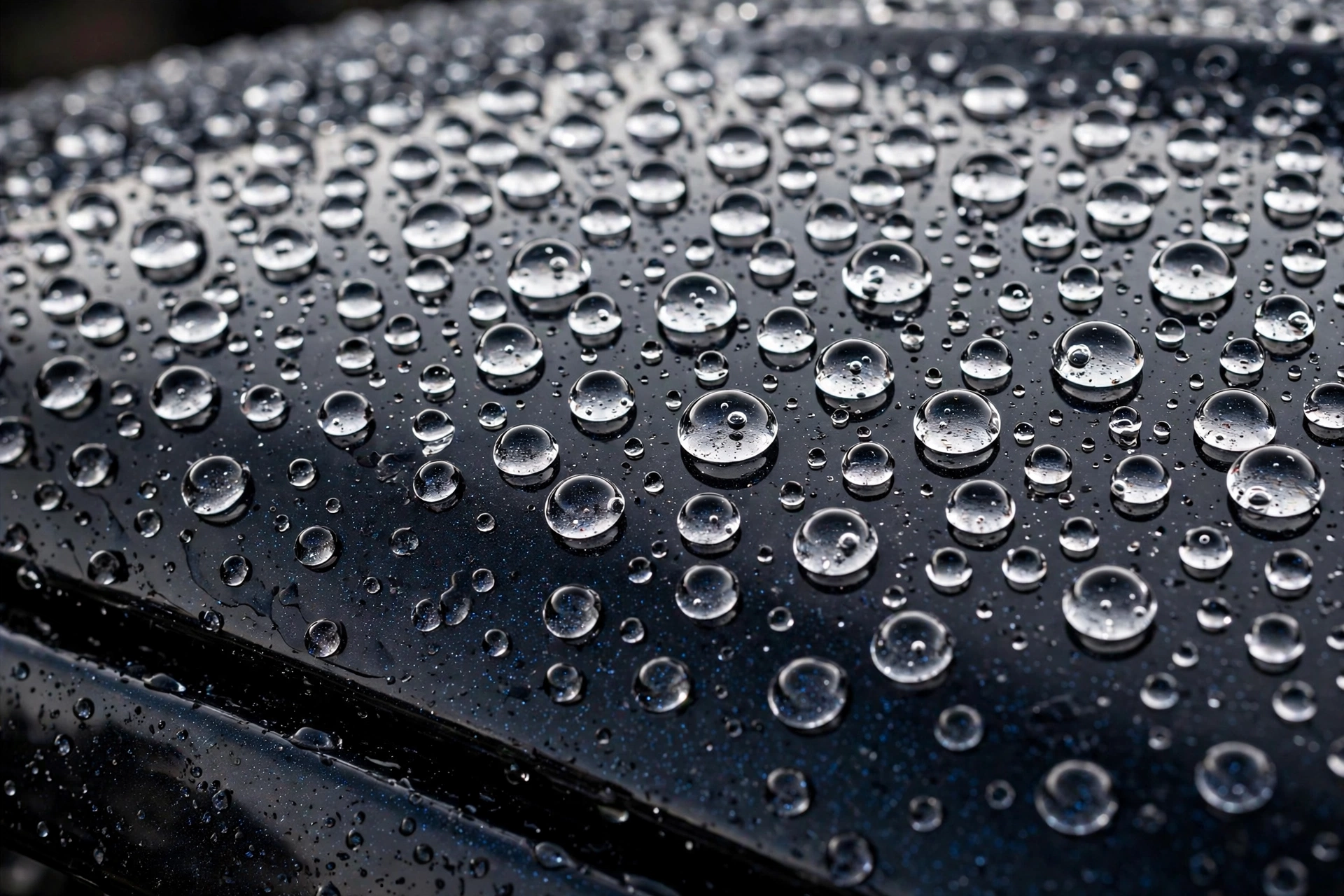
A hydrophobic coating is a protection product that makes water bead up and roll off your car's paintwork instead of clinging to it. Ranging from hydrophobic sprays to professional ceramic coatings, they create a surface that keeps cars cleaner, makes washing easier and adds gloss. For Bolton's rainy climate, that behaviour is one of the most useful benefits in detailing.
Key facts
- Effect
- Water beads up and rolls off paintwork instead of clinging, carrying loose dirt with it.
- Options
- From hydrophobic spray coatings to professional ceramic coatings with lasting hydrophobics.
- Upkeep
- Wash with pH-neutral shampoo; a compatible hydrophobic spray top-up restores beading in minutes.
- Revival
- A decontamination wash once or twice a year clears bonded traffic film and revives beading.
There's something deeply satisfying about watching rain bead up and roll off a freshly coated bonnet — but hydrophobic behaviour is far more than a party trick. A hydrophobic car coating changes how water interacts with your paintwork: instead of spreading into a flat, dirt-trapping film, water forms tight beads that roll off, carrying loose dust and grime with them. The result is a car that stays cleaner between washes and practically dries itself.
Hydrophobic coatings come in many forms, from quick spray-on products to professional ceramic coatings that last for years — and the right choice depends on your budget, your car and how long you plan to keep it. In this guide we explain how the technology works, how spray coatings compare with professional coatings, and how to keep the water-beading behaviour at its peak through Bolton's wettest months.
How Hydrophobic Coatings Work: Beading vs Sheeting
Hydrophobicity is about surface energy. An untreated clear coat has relatively high surface energy, so water spreads out and clings. A hydrophobic coating lowers that surface energy dramatically, raising the water's contact angle — water would rather stick to itself than to your paint, so it forms beads. On a steep panel those beads roll off; on flatter panels they sit until airflow or a rinse moves them.
You'll hear detailers talk about beading versus sheeting. Tight, round beading looks spectacular and shows the coating is healthy. Sheeting — water sliding off in a continuous curtain — is actually the more effective self-cleaning behaviour on vertical panels. A good hydrophobic coating gives you both, depending on the panel angle and how the water arrives.
Hydrophobic Sprays vs Professional Ceramic Coatings
Hydrophobic spray coatings are the quick win: spray on, wipe off, and enjoy months of water beading and easier washing. They're affordable, user-friendly and ideal as a top-up for an existing coating or protection for a car you won't keep long. Durability is the trade-off — most sprays last three to twelve months depending on the product and conditions.
Professional ceramic coatings are the long game. Applied panel by panel after full preparation, they cure into a hardened layer that delivers intense hydrophobics for years rather than months, along with greater chemical resistance and gloss. The upfront cost is higher, but so is everything else — durability, performance and peace of mind.
Real-World Benefits for UK Driving
In a climate like Greater Manchester's, hydrophobics earn their keep daily. Rain-heavy weeks that would leave an unprotected car filthy simply rinse a coated car cleaner as you drive. Winter road grime and salt sit on the coating rather than bonding to the paint, so they're removed with a gentle wash instead of aggressive scrubbing.
- Rain rinses away light dust as you drive
- Less dirt bonding means gentler, safer washes
- Faster drying with fewer water spots
- Winter salt and grime release more easily
- Gloss that stays vivid between details
Keeping Your Hydrophobic Coating Performing
Hydrophobic behaviour fades if the coating gets clogged with traffic film or washed with harsh chemicals — but it's usually recoverable. Wash regularly with a pH-neutral shampoo, avoid automatic brush washes and strong traffic film removers, and dry promptly to prevent water spots. A decontamination wash once or twice a year clears bonded film and revives beading.
When beading starts to flatten despite proper washing, a compatible hydrophobic spray top-up restores it in minutes. Think of it as a boost for your coating — a quick refresh that keeps the water-repellent behaviour at its peak between professional details.
Serving Bolton & Greater Manchester
If any place in the UK puts hydrophobic coatings to the test, it's Bolton. Pennine rain is a near-daily event for much of the year, and drivers from Horwich to Farnworth know the frustration of a car that's dirty again days after washing. A hydrophobic coating turns that rain into an ally — water sheets off carrying dust with it, so your car genuinely looks cleaner for longer between washes. It's the single most noticeable day-to-day benefit our customers mention.
Areas we serve
BoltonHorwichFarnworthKearsleyLittle LeverWesthoughtonBlackrodAdlingtonBuryRadcliffeRamsbottomTottington
View all areas covered →Frequently asked questions
What is a hydrophobic coating for cars?
How long does a hydrophobic coating last?
What's the difference between hydrophobic and superhydrophobic car coatings?
Can I apply a hydrophobic spray coating myself?
Why has my coating stopped beading water?
Get your free, no-obligation quote
Tell us about your car and what it needs. We'll reply with an exact price and the earliest available slot.
Open 24 hours, 7 days a week — call or message any time.