Clay Bar Treatment in Bolton, Greater Manchester
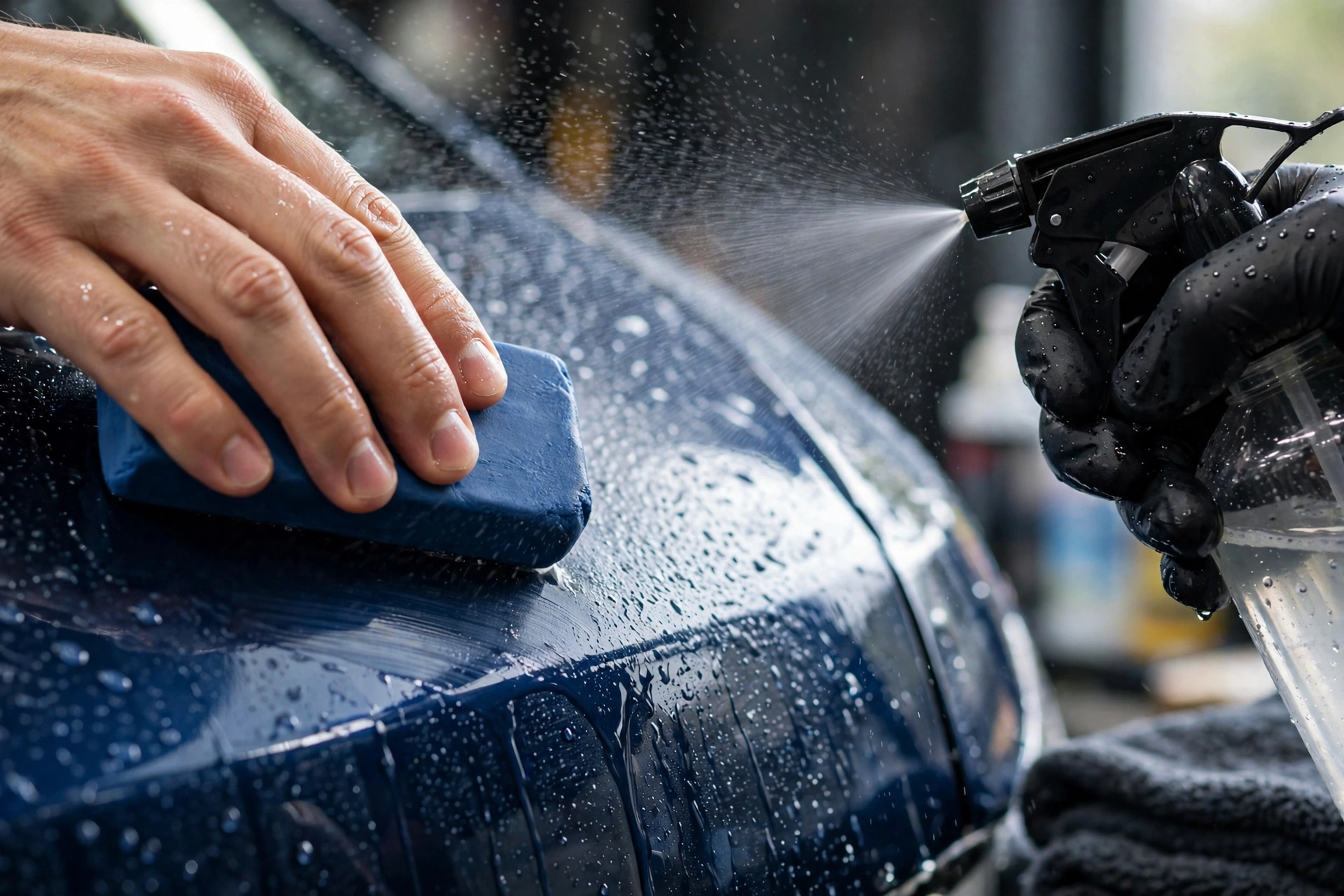
A clay bar treatment is a decontamination process that removes bonded contaminants — tar, iron fallout, tree sap and fallout — from your car's paintwork using a clay bar with lubricant. Washing alone can't shift these embedded particles. Claying leaves paint glass-smooth and is essential preparation before machine polishing or ceramic coating, so products bond and the finish stays flawless.
Key facts
- Removes
- Bonded tar, iron fallout, tree sap and embedded contaminants that washing alone can't shift.
- Process
- 5-step decontamination process using a clay bar with dedicated lubricant.
- Essential before
- Machine polishing or ceramic coating — coatings bond to clean paint, not contaminated paint.
- Alternatives compared
- Clay bars, clay mitts and iron fallout removers each suit different contamination levels.
Run your fingertips lightly over your car's paintwork after a wash. If it feels gritty or rough like sandpaper rather than smooth glass, that's bonded contamination — tiny particles of tar, iron and industrial fallout embedded in the clear coat that no amount of shampoo will dissolve. A clay bar treatment is the detailing process that removes them: a soft, pliable automotive clay bar glided over lubricated paintwork gently pulls contaminants out of the surface.
Claying is one of those steps most drivers have never heard of but every professional detailer considers non-negotiable. It's the bridge between washing and polishing: skip it, and you polish over embedded grit or seal contamination under an expensive ceramic coating. Done properly with the right detailing clay and plenty of lubricant, it's completely safe — and the glass-smooth result has to be felt to be believed.
What Clay Barring Does to Your Paintwork
A clay bar works through gentle mechanical action. As the soft clay glides across lubricated paint, it shears off and traps microscopic contaminants sitting proud of the clear coat — particles far too small to see individually but collectively responsible for that rough, gritty texture. The clay itself is mildly abrasive, which is why proper lubrication is essential: the lubricant lets the bar slide rather than drag, lifting contamination without scratching.
The transformation is immediate and tactile. Panels that felt like sandpaper become smooth as glass, colours look richer because light reflects cleanly, and subsequent steps — polishing, waxing or coating — can bond directly to clean clear coat instead of sitting on top of grime.
The Bonded Contaminants a Clay Bar Removes
Daily driving bombards your paintwork with particles that washing can't remove. Brake dust from the car in front bakes on as iron fallout, leaving tiny orange rust spots. Road tar flicks up from fresh tarmac. Tree sap and honeydew settle under suburban trees, and industrial fallout drifts down near railways and building sites. A clay bar treatment tackles all of them in one process.
- Tar spots flicked up from road surfaces
- Iron fallout — tiny rust spots from brake dust
- Tree sap and honeydew from overhanging trees
- Industrial and rail fallout near lines and works
- Overspray and paint mist from nearby spraying
- Bonded road film and embedded general grime
Why Claying Matters Before Polishing or Ceramic Coating
Claying is the foundation every later stage depends on. Machine polishing over contaminated paint drags embedded grit across the surface, creating fresh scratches as you try to remove old ones. And ceramic coatings need to bond chemically to clean clear coat — apply one over bonded contamination and the bond is compromised, shortening the coating's life and dulling its finish.
That's why no professional coating job skips the clay bar. Whether your car is heading for a single-stage polish, a full paint correction or a multi-year ceramic coating, claying first is what guarantees the products that follow can do their job properly.
Clay Bar vs Clay Mitt vs Iron Fallout Remover
Traditional clay bars remain the thorough choice, moulded by hand to reach every contour. Clay mitts and clay towels cover large flat panels faster and are easier for beginners, though they're slightly less precise around badges and edges. Iron fallout removers are chemical decontamination — they dissolve iron particles but don't touch tar or sap. Professionals use all three in sequence: chemical decontamination first, then mechanical claying for what's left.
If you're buying a clay bar kit for home use, choose a fine-grade bar and a dedicated clay lubricant — never use a clay bar dry or with plain water. And if you drop the bar on the ground, throw that piece away: one grain of grit picked up from the floor will scratch your paint.
Our Clay Bar Treatment Process
Decontamination is done in the right order — chemical first, mechanical second — for the safest, smoothest result.
- 1
Thorough wash and rinse
Every clay treatment starts with a full wash — snow foam, hand wash and rinse — so the clay bar only has to deal with bonded contamination, not loose dirt. Claying a dirty car would drag grit across the paint and cause the very scratches we're trying to prevent.
- 2
Chemical decontamination
Before the clay comes out, we treat the paintwork with iron fallout remover and tar remover. These chemicals dissolve what they can on their own, which means less work — and less friction — for the clay bar stage that follows.
- 3
Claying panel by panel
Working one panel at a time, we glide a fine-grade automotive clay bar over the paint using generous amounts of dedicated clay lubricant. You can feel the contamination disappearing as the bar moves from gritty to smooth, and we knead the clay regularly to expose a clean surface.
- 4
Rinse and inspection
After claying, the car is rinsed thoroughly to remove all lubricant residue, then inspected by hand and under lighting. Any stubborn spots get a second pass — we don't move on until every panel feels uniformly smooth.
- 5
Protection or next stage
Freshly clayed paint is clean but unprotected, so we never leave it bare. Depending on your booking, we follow with a wax, sealant, machine polish or ceramic coating — sealing in that glass-smooth finish while it's at its best.
Serving Bolton & Greater Manchester
Bolton cars pick up more bonded contamination than most. M61 spray leaves a film of iron-rich brake dust, winter gritting bonds salt and grit to lower panels, and suburban streets around Smithills, Heaton and Bromley Cross mean tree sap and pollen for much of the year. We clay bar cars from across Bolton — Horwich, Farnworth, Westhoughton and beyond — and drivers are always amazed at how rough their clean paint felt before, and how glassy it feels after.
Areas we serve
BoltonHorwichFarnworthKearsleyLittle LeverWesthoughtonBlackrodAdlingtonBuryRadcliffeRamsbottomTottington
View all areas covered →Frequently asked questions
What does a clay bar do to a car?
Can I use a clay bar kit at home?
Does clay barring scratch paint?
How often should a car be clayed?
Is clay bar treatment necessary before ceramic coating?
Get your free, no-obligation quote
Tell us about your car and what it needs. We'll reply with an exact price and the earliest available slot.
Open 24 hours, 7 days a week — call or message any time.