PPF vs Ceramic Coating: Which Is Best?
By Ceramic Coating Bolton · Published 2026-11-13 · Last reviewed 13 November 2026 · Ceramic coating guides
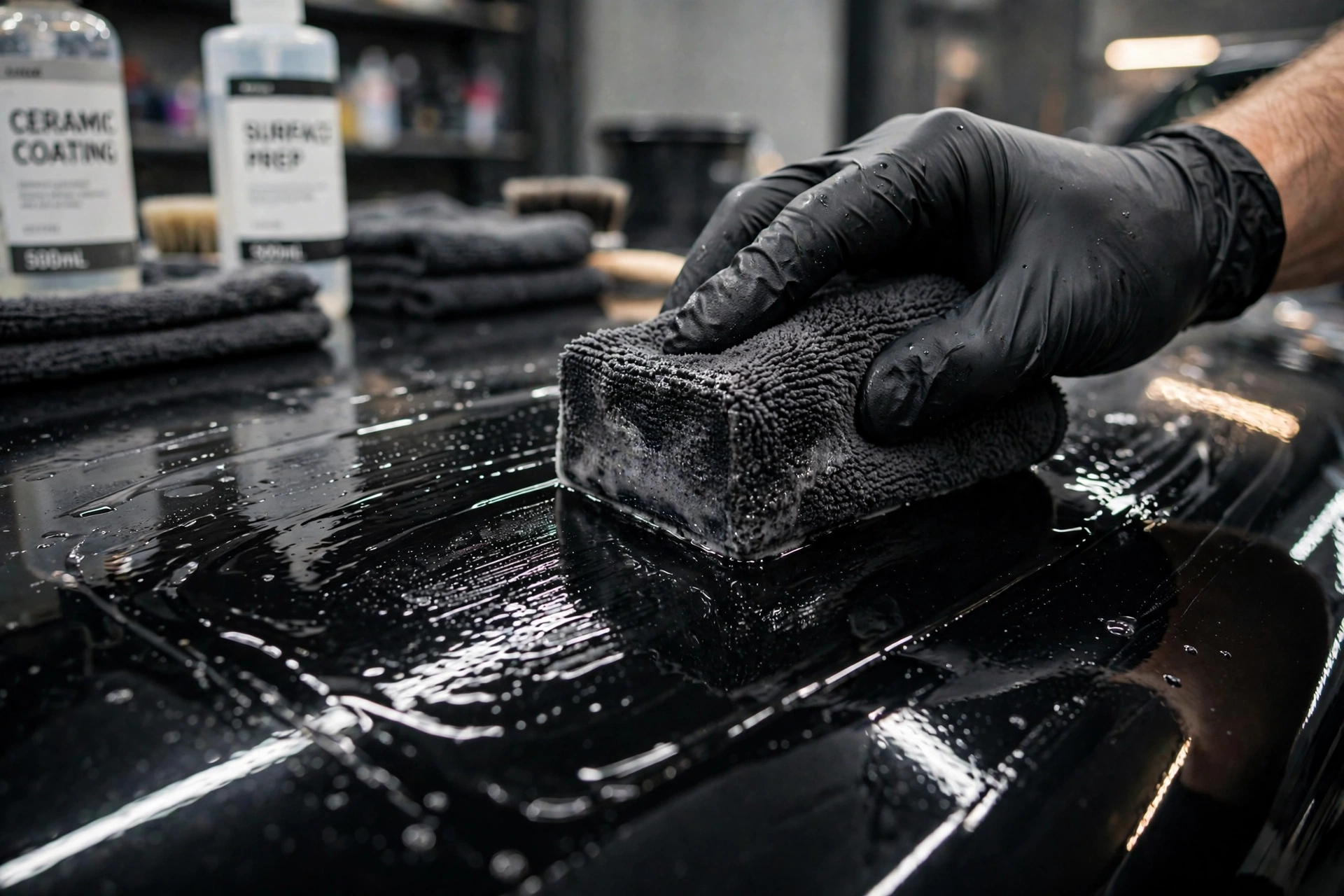
Neither is universally better — they protect in different ways. PPF is a clear polyurethane film that absorbs stone chips and physical impacts; ceramic coating is a chemical layer that adds gloss, water beading and chemical resistance but will not stop stone chips. For impact protection, PPF wins; for gloss and easier washing, ceramic coating wins; many owners combine both, with ceramic coating applied over the film.
Ask any detailer whether PPF or ceramic coating is better and you'll get a straight answer — it depends what you're trying to protect against. They are two completely different products solving two different problems, and the confusion comes from the fact that both are sold as 'paint protection'. This guide compares them honestly: what each one does, what it costs in the UK, how long it lasts, and which one suits your car and your driving.
The short version: if stone chips from the M61 are your main worry, only PPF (paint protection film) will stop them. If you want deeper gloss, water beading and much easier washing, ceramic coating is the better spend. Many drivers end up with both — film on the impact zones, coating over everything — and that's usually the best protection money can buy. One honest note first: we apply ceramic coatings; we don't fit PPF. This guide tells you the truth about both anyway.
What PPF (Paint Protection Film) Is
PPF is a clear, self-healing polyurethane film applied to the paintwork like a second skin. It is fitted panel by panel — most commonly the front bumper, bonnet, wings and mirrors, or the whole car — and its job is physical: it absorbs stone chips, scratches and road rash that would otherwise reach the paint. Modern films have a self-healing top coat, so light swirls and scuffs disappear with a little warmth from the sun or hot water.
Because it is a physical barrier, PPF is the only one of the two that genuinely protects against impacts. The trade-off is cost and coverage: a front-end package covers the areas most likely to be hit, while a full-car wrap costs several times more. Film edges can also be visible on close inspection, and a badly fitted film is worse than no film at all — installer skill matters enormously.
What Ceramic Coating Is
Ceramic coating is a liquid chemical — usually silicon dioxide (SiO2) based — that is applied by hand and cures into a hard, glass-like layer bonded to the clear coat. It adds deep gloss, intense water beading and chemical resistance against bird lime, tree sap, tar and road salt, and it makes washing dramatically easier. A professional coating lasts two to five years depending on the tier and the preparation beneath it.
What it does not do is stop physical damage. A stone chip from the motorway will go straight through a ceramic coating, and so will a key scratch or a car-park brush. Ceramic coating is a chemical shield, not a physical one — and any detailer who tells you otherwise is overselling it.
PPF vs Ceramic Coating: Side by Side
Put them next to each other and the choice becomes clearer. PPF wins on impact protection and self-healing; ceramic coating wins on gloss, hydrophobics, ease of washing and price. PPF typically lasts five to ten years; a professional ceramic coating lasts two to five years. PPF needs a specialist fitter and a dust-free environment; ceramic coating needs meticulous preparation — decontamination, clay bar and machine polishing — but is the more affordable of the two by a wide margin.
- Stone chips and impacts — PPF stops them; ceramic coating does not
- Gloss and depth — both improve it, but ceramic coating gives the deeper wet look
- Water beading and easy washing — ceramic coating is far better
- Self-healing swirls — PPF heals light marks with warmth; ceramic coating does not
- Durability — PPF 5–10 years; professional ceramic coating 2–5 years
- Cost — PPF is several times the price of ceramic coating for the same car
What Each One Costs in the UK
As typical UK guide ranges — not our prices, and not a quote: a professional ceramic coating usually runs £300–£1,000 depending on durability, vehicle size and preparation, as our cost guide explains. PPF is in a different league: a front-end package (bumper, bonnet, wings, mirrors) typically runs £800–£1,500, while a full-car wrap usually runs £3,500–£6,500 or more. The film itself is expensive, and the fitting is slow, skilled work.
That price gap is why most drivers choose ceramic coating, and why PPF tends to appear on new, high-value or cherished cars — or just on the front end of a daily driver that does heavy motorway miles. If your budget only stretches to one, ceramic coating gives the bigger day-to-day difference for the money; PPF gives the better protection against chips.
Can You Have Both PPF and Ceramic Coating?
Yes — and on a car worth protecting properly, it's the best combination available. The film goes on first, over the corrected paintwork, and the ceramic coating goes on top of the film. The coating adds gloss and hydrophobics to the PPF, makes the film easier to wash, and helps it resist staining. Many owners PPF the front end — the stone-chip zone — and ceramic-coat the rest of the car, which keeps the cost sensible while covering the worst of the damage.
One warning: the order matters and so does the timing. Coating goes over film, never film over coating, and the film needs to be fully settled before anything is applied on top. A detailer who does both will sequence the job for you; if you're using two different businesses, tell each one what the other is doing.
Which Should You Choose in Bolton?
It comes down to your driving. If you commute the M61 every day and your front end already shows stone-chip rash, PPF on the front end is the only product that will stop it getting worse — and we will tell you that plainly even though we don't fit film ourselves. If your paint is in good shape and you want it glossier, easier to wash and protected from salt, bird lime and UV for years, ceramic coating is the right spend.
If you're not sure, start with an honest assessment: we inspect your paintwork, tell you what each option would and wouldn't do for your car, and quote the ceramic coating properly. If PPF is genuinely the better answer for your car, we'll say so rather than sell you a coating you don't need.
Frequently asked questions
Which is better, PPF or ceramic coating?
Does ceramic coating protect against stone chips?
How much does PPF cost in the UK?
Can ceramic coating go over PPF?
Get your free, no-obligation quote
Tell us about your car and what it needs. We'll reply with an exact price and the earliest available slot.
Open 24 hours, 7 days a week — call or message any time.