Ceramic Coating Cure Time & First-Week Aftercare
By Ceramic Coating Bolton · Published 2026-10-14 · Ceramic coating guides
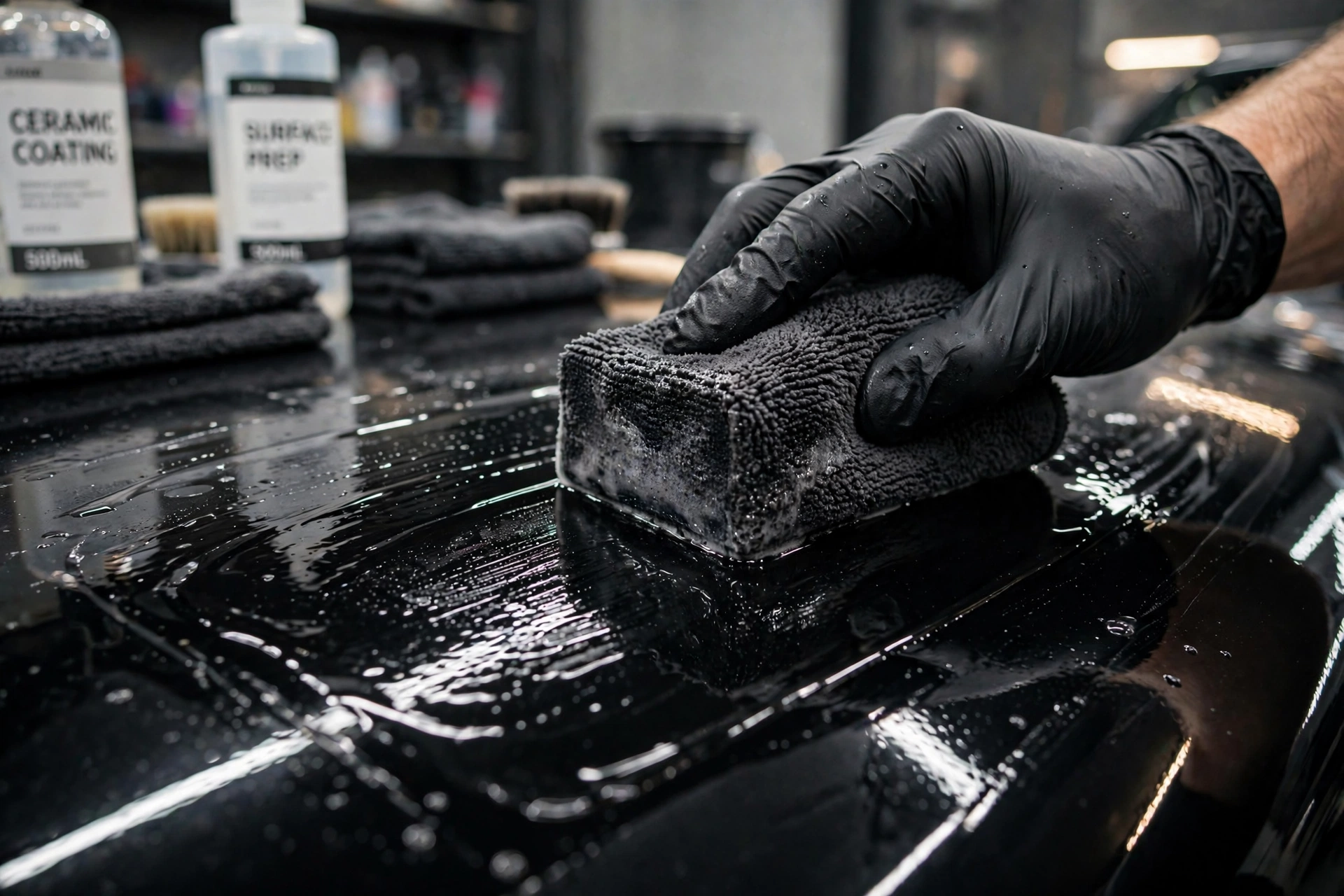
Ceramic coating is touch-dry within hours but takes around seven days to fully cure and reach maximum hardness and chemical resistance. During the first week, keep the car dry, avoid washing, don't apply any products, and park under cover if possible. The coating is vulnerable while curing — water spots and contamination during this window can permanently mark the finish.
Your detailer hands back the keys, the paint looks incredible — and then comes the part nobody enjoys: the waiting. A ceramic coating may feel dry within hours, but the chemical curing process that gives it hardness, chemical resistance, and durability takes roughly a week. What you do (and don't do) during those seven days genuinely affects the final result.
This guide explains what's happening chemically during the curing process, the strict day-by-day aftercare rules for the critical first week, the common mistakes that can permanently spoil a fresh coating before it has hardened, and how to ease back into your normal washing routine once curing is complete. It is short-term discipline for long-term reward. Your patience this week pays dividends for years.
What's Happening During Curing
When applied, the coating is SiO2 suspended in solvents. Over the first hours, solvents evaporate and the coating becomes touch-dry — but the real work is just starting. Over the following days, the SiO2 particles cross-link and bond to the clear coat, a chemical process that builds hardness and chemical resistance. Full cure typically takes five to seven days in normal conditions; cold or damp weather slows it. Until cross-linking completes, the coating is softer, more chemically vulnerable, and easier to mark than it will ever be again.
The First 7 Days: The Rules
The aftercare is simple but strict. Keep the car dry for at least the first 24–48 hours — no rain, no washing, no sprinklers. Don't wash the car at all for seven days; when you do first wash it, be extra gentle. Apply no products whatsoever: no wax, no detailer spray, no toppers — they interfere with curing. Avoid parking under trees (sap, droppings) and, if possible, keep the car garaged or under cover. Don't pick at any dust nibs you spot; they'll be dealt with at your follow-up check.
- Keep the car completely dry for the first 24–48 hours
- No washing of any kind for seven days
- No waxes, detailer sprays, or toppers during curing
- Park under cover; avoid trees, bird zones, and roadworks
- Don't touch or pick at dust nibs — leave them for the detailer
What Can Go Wrong in Week One
Water is the biggest risk: rain or washing during the first day or two can cause water spots that etch into the soft, uncured coating permanently. Chemical exposure — road spray, industrial fallout, even strong shampoo — can interfere with cross-linking. Bird droppings landing on uncured coating are particularly nasty on the soft, uncured surface. None of this is likely if you follow the rules; all of it is possible if you don't. The first week is the entire vulnerability window — after that, the coating starts looking after itself.
After Curing: Easing Into Normal Care
Once the seven days pass, the coating is at or near full hardness and you can begin normal maintenance: gentle two-bucket washing, pH-neutral shampoo, and your regular routine. Hold off on silica toppers for another week or two — let the base layer fully settle first. Many detailers offer a complimentary follow-up inspection after a couple of weeks to check for high spots or issues; take them up on it. From here on, our maintenance schedule takes over.
Your First-Week Aftercare Timeline
- 1
Days 1–2: Keep it dry
No water whatsoever — avoid rain, sprinklers, and damp roads if possible. Park under cover. The coating is at its most vulnerable while solvents finish evaporating.
- 2
Days 3–4: Still hands off
Light rain exposure is less catastrophic now, but still avoid washing and keep the car sheltered. Don't apply any products or touch the paint unnecessarily.
- 3
Days 5–7: Nearly there
The coating is hardening well. Continue avoiding washing and chemicals. If you must drive in rain, it's no longer an emergency — just don't wash it yet.
- 4
Day 7+: First gentle wash
Perform your first careful two-bucket wash with pH-neutral shampoo. Inspect water behaviour — beading should be strong and uniform across all panels, as the final curing check.
- 5
Week 3+: Full routine
Begin normal maintenance washing and, if you wish, silica toppers. Book any follow-up inspection your detailer offers to confirm the cure completed perfectly, before settling into the long-term schedule.
Frequently asked questions
What happens if it rains on my fresh coating?
Can I drive the car during the curing week?
How do I know when curing is complete?
Does cold weather affect curing?
Get your free, no-obligation quote
Tell us about your car and what it needs. We'll reply with an exact price and the earliest available slot.
Open 24 hours, 7 days a week — call or message any time.